Friday, August 29, 2008

North Indian Railway

Notable trains
The Darjeeling Himalayan Railway is a World Heritage Site. The Darjeeling Himalayan Railway, a narrow
gauge train with a steam locomotive is classified as a World Heritage Site by UNESCO. The route started at New Jalpaiguri in the plains in West Bengal and traverses tea gardens en route to Darjeeling, a hill station at an elevation of 2,134 metres (7,000 ft).
The Nilgiri Mountain Railway, in the Nilgiri Hills in southern India, is also classified as a World Heritage Site by UNESCO. It is also the only rack railway in India.
The Chatrapati Shivaji Terminus (formerly Victoria Terminus) railway station in Mumbai is another World Heritage Site operated by Indian Railways.
The Palace on Wheels is a specially designed train, lugged by a steam engine, for promoting tourism
in Rajasthan.
The Samjhauta Express train ran between India and Pakistan. It was closed due to hostilities between the two nations in 2001 but was reopened when the hostilities subsided in 2004.
The Lifeline Express is a special train popularly known as the "Hospital-on-Wheels" which provides healthcare to the rural areas.
The Himsagar Express, between Kanyakumari and Jammu Tawi, has the longest run in terms of distance and time on Indian Railways network. It covers 3,745 km (2,327 miles) in about 74 hours and 55 minutes.


North Central Railway (NCR)

Indian Railways Network indian rail

The Indian railways traverse through the length and width of the country; the routes cover a total length of 63,140 km (39,462 miles). It is one of the largest and busiest rail networks in the world, transporting just over six billion passengers and almost 750 million tonnes of freight annually. Indian Railway is the world's largest commercial or utility employer, with more than 1.6 million employees. The entire railway reservation system was streamlined with computerisation in 1995.

West Central Railway

West Central Railway

West Central Railway (WCR) was founded in 1924 under British rule. It began transporting military goods for the British armed forces in 1928, when the railroad from Bombay to Pune was finished. In the late 1930s, the "Indian Railway of Bombay" started passenger transportation, but as war began, these efforts were suspended. The private company was taken over by the Royal Army in 1940.

The "Railway of Bombay" did not restart its business until India became independant in 1947. In the late 1960s three other railroads were built, leaving Bombay in different directions, reaching Ahmadabad in the North, Nagpur in the East, and Hyderabad in the South-East.

From 1970 to 1992, the company was divided into Western Railway and Central Railway. Today, WCR is by far India's largest railway system, transporting 1.4 billion passengers every year. Most of its traffic runs along the four railroads connecting Bombay's city with its suburbs. Its headquarters are located in Bombay (Mumbai), Liberty Road 1402.

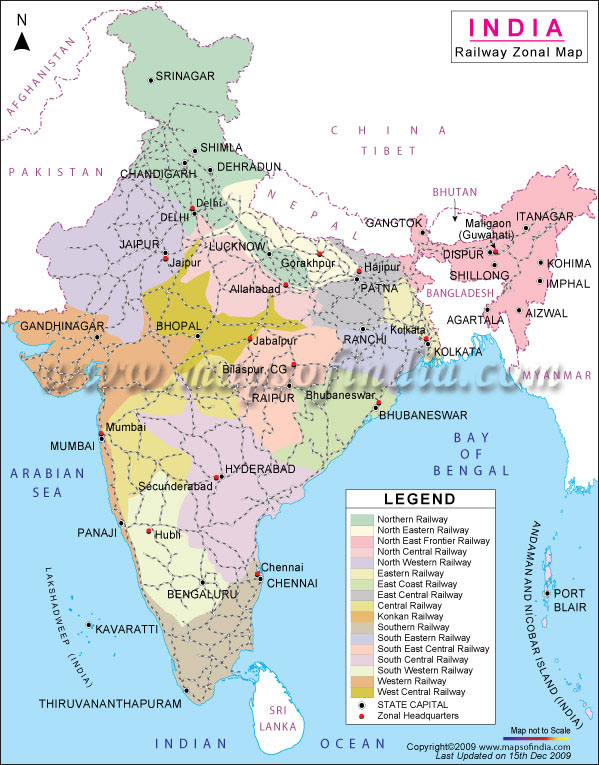
Railway Map

The image “http://www.mapsofindia.com/maps/india/indian_railway.jpg” cannot be displayed, because it contains errors.Railway Map

Indian Railways Map

Indian Railways Map

The Railways in India are the principal mode of transportation for freight and passengers. The railways have played an important role in the development of industries and agriculture. Indian railways consist of a vast network of 7, 031 stations spread over a route length of 63, 221 km with a fleet of 7,817 locomotives, 5,321 passenger service vehicles, 4, 904 other coaching vehicles and 228, 170 wagons as on 31st March 2004.

Indian Railway has the distinction of being one of the biggest and busiest rail networks in the world carrying more than sixteen million passengers on a daily basis. In terms of headcount again Indian Railway scores as it employs more than 1.6 million employees that is only second to the Chinese Army in terms of people employed.

Spanning nearly two centuries Indian Railways has been serving the country with utmost pride. It was only in 1851 when the first train ran in the country for hauling construction material in Roorkee and by 1853 the first passenger train service became operational running between Bori Bunder, Bombay and Thane covering a distance of twenty one miles thus marking the formal birth of rail network in India.

The Indian Railways network binds the social, cultural and economical fabric of the country and covers the whole of country ranging from north to south and east to west removing the distance barrier for its people. The railway network of India has brought together the whole of country hence creating a feeling of unity among the Indians.

North Western Railway

The image “http://members.tripod.com/shankardubai/nwrbanner.gif” cannot be displayed, because it contains errors.
Welcome!

Welcome to North West Rail, a website which has been created by a team of dedicated railway enthusiasts. We aim to tell you the latest news about railways in North West England.

Trains are part of our every day lives, and we think they need drastic improvements!


The Railway Companies serving the North West are:

First Transpennine Express
Arriva Trains Wales/Trenau Arriva Cymru
Virgin Trains
Northern Rail
Central Trains
Merseyrail

If you have any contributions you wish to send us, please e-mail them to us at the address listed in the Contact Section.

Unfortunately, due to certain circumstances, we have not been able to take as many of our own pictures as we'd like, so we have borrowed a few. We have tried to give credits where we can, however we have had difficulty with a few pictures. If you recognise a picture and would like it credited, or removed, please do not hesitate to get in touch.

The North Western Railway is the main railway company featured in The Railway Series books by the Rev. W. Awdry and the TV series Thomas The Tank Engine & Friends. Although the company's name has never been specifically stated in either the books or on television it was mentioned as such in tie-in books such as "Island of Sodor, Its History, People and Railways" by the Rev. Awdry and also on some maps that were drawn to accompany the Railway Series.

The railway is situated on the fictional Island of Sodor and is usually referred to as the Fat Controller's Railway after the nickname of its chief executive or chairman Sir Topham Hatt.

The railway's motto is "Nil Unquam Simile", which is Latin for "There's nothing quite like it"!

For a list of engines that work on the NWR, see Railway Engines.

Wednesday, August 27, 2008

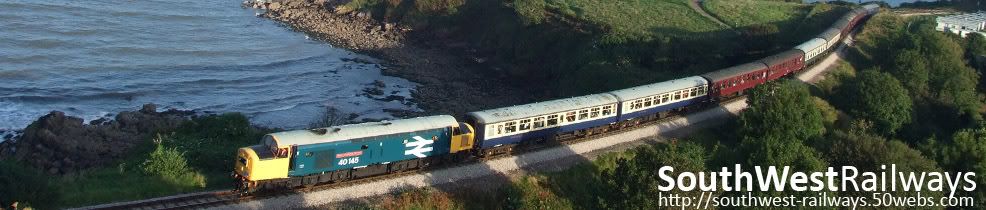
South Western Railway (SWR)

http://i93.photobucket.com/albums/l50/liamy_2006/swr/SWRlogo2.jpg

BANGALORE: The South Western Railway (SWR) will develop the Byappanahalli Railway Station as the third railway terminal for Bangalore.

Speaking to presspersons here on Wednesday, SWR General Manager Praveen Kumar said that the city and Yeshwanthpur railway stations had reached their saturation point and it had become impossible to introduce new trains from these terminals.

A detailed proposal had been sent to the Railway Board to develop the Byappanahalli Station into a modern terminal and the approval was expected shortly, Mr. Kumar said.

The terminal would be integrated with the upcoming Metro Rail and bus transport facilities, he added.

Earlier, Mr. Kumar launched the services of touch-screen terminals and threw open a new passenger concourse at the City Railway Station. The new concourse has a cloak room, touch screen terminal, a few shops and other amenities.

While the City Railway Station will have seven touch-screen terminals, Cantonment and Yeshwanthpur will have two each and Yelahanka, Hosur, Dharmapuri, Tumkur, Maddur, Mandya, Satya Sai Prasanthi Nilayam and Hindupur one each. In the second phase, two terminals would be installed at Krishnarajapuram and one each at Kengeri, Whitefield, Ramanagaram, Chennapatna, Kuppam and Bangarpet railway stations, he said.

Passengers can get a whole lot of train information at the touch of the screen on these terminals that would provide real-time information, he said.

Mangalore train

To a question on the passenger train service to Mangalore, Mr. Kumar expressed confidence that at least one pair would be operational by September-end. “I have indications from the Railway Board in this regard,” he added. Mr. Kumar said the track between Sakleshpur and Subramanya Road could accommodate a maximum of seven pairs of trains in a span of 24 hours.

At present, three pairs of goods trains were being operated on this route and the SWR intended to add at least two more goods trains considering the huge cost incurred during the conversion of the line to broad gauge.

On the hue and cry raised by Kannada organisations regarding recruitment of over 4,700 Group D employees for SWR and the Rail Wheel Factory in Yelahanka, Mr. Kumar said the recruitment process was being conducted according to the law.

“As the physical fitness and written tests are being conducted within Karnataka, I hope that the majority of those who get selected will be from within the State. I wish local people get selected because outsiders, if selected, would begin demanding transfer to their States after some time,” he said.

Mr. Kumar further said it was for the first time after the formation of the SWR that group D employees were being recruited in such huge numbers. He hoped that the recruitment would not only help the railways but also the local people.

Divisional Railway Manager (DRM) of Bangalore Mahesh Mangal and Additional DRM Deepak Chhabra were present. Later, Mr. Kumar inaugurated the advance reservation facility at the renovated Krishnarajapuram Railway Station building.

Brief introduction

Brief introduction

Indian Railways (IR) is largest system in world under single management& is life line of country.It plays very important part in socioeconomic development of country. It has one of the largest and busiest rail networks in the world, transporting over 5 billion passengers and over 600 million tonnes of freight annually. IR is also the world's largest commercial or utility employer, having more than 1.6 million regular employees on its payroll.Annual expenditure & earning of Indian Railway is about 42000cr & 36000 cr as per budget of 2004-05

The railways traverse through the length and breadth of the country covering a total length of 63,140 km (39,200 miles). IR owns a total of 222147 wagons, 42570 coaches and 7,739 locomotives and runs a total of 14,444 trains daily, including about 8,702 passenger trains(2003-04)

The total length of track used by Indian Railways is about 108,706 km (67,547 miles). Track sections are rated for speeds ranging from 75 to 160 km/h (47 to 99 mph). Indian railways uses three gauges, the Broad gauge (wider than the standard gauge – 4 ft 8½ in (1,435 mm)); the metre gauge; and the Narrow gauge (narrower than the standard gauge).

Gauge Broad gauge – 1,676 mm (5.5 ft) – is the most widely used gauge in India with 86,526 km (53,765 miles) of track. In some regions with less traffic, the metre gauge – 1,000 mm (3.28 ft) – is common, although the Unigauge project is in progress to convert all track to broad gauge. Narrow Gauge is present on a few routes, lying in hilly terrains, which are usually difficult to convert to broad gauge. Narrow guage covers a total of 3,651 km (2,269 miles). The Nilgiri Mountain Railway and the Darjeeling Himalayan Railway are two famous lines that use narrow gauge. This gauge is also used by zoos in India, whose tracks are sometimes maintained by the railways.

central railway


The formal inauguration ceremony was performed on 16th April 1853, when 14 railway carriages carrying about 400 guests left Bori Bunder at 3.30 pm "amidst the loud applause of a vast multitude and to the salute of 21 guns."

The first passenger train steamed out of Howrah station destined for Hooghly, August, 1854. Thus the first section of the East Indian Railway was opened to public traffic, inaugurating the beginning of railway transport on the Eastern side of the sub-continent.

In south the first line was opened on Ist July, 1856 by the Madras Railway Company. It ran between Veyasarpandy and Walajah Road (Arcot), a distance of 63 miles. In the North a length of 119 miles of line was laid from Allahabad to Kanpur on 3rd March 1859. The first section from Hathras Road to Mathura Cantonment was opened to traffic on 19th October, 1875.
These were the small beginnings which is due course developed into a network of railway lines all over the country. By 1880 the Indian Railway system had a route mileage of about 9000 miles.


Electric Locomotive

Electric Locomotive YCG E 1/21900

Builder: Hawthorn Leslie & Co, UK. Electricals by English Electric,Leeds, UK Class: YCG/1 Year Built: 1930 Service: SIR (South Indian Railway), later SR (Southern Railway) Wheel Arrangement: Bo-Bo Unique Features: Dual braking (vacuum and air), entrance from balconies at each end, could also work for short spells in unelectrified yard lines, on attachment of trailer housing battery accummulators Numbering: 21900 Named: ---- Voltage: 1,500 V dc Rail Gauge: mg (3' 3 3/8")

The Madras Beach-Tambaram section was the first mg line to be electrified in 1930. The YCG/1s were the first electrics to arrive (apart from the mg e.m.us), making them the first mg electrics on Indian soil. Alas, their spent their entire working life on the 25 km stretch between Madras Beach and Tambaram. The main line was steam worked till 1968, after which it was electrified upto Villupuram on 25,000 V ac, in keeping with IR policy. Being dc engines, the YCG/1s used to run on the suburban lines, and never had the previlege of working main line trains. They were used for switching operations and shunting freights between Madras Beach and Tambaram. They also used to haul one suburban train between the stations daily, with silver-coloured YT class cars.One outstanding featue of the YCG/1s was their capability to work on unelectrified yard lines on attachment of a trailer car housing battery accummulators. After the main line was electrified in 1968, age, but a spanking new breed or YAM/1 ac electrics meant that the YCG/1s were not re-ordered. One more unit is preserved outside the e.m.u. car shed at Tambaram, in Madras.


South Eastern Railway (SER)


East Coast Express - Kharagpur (KGP) - May 1994

East Coast Express
This picture and the other following pictures from Kharagpur (KGP) were taken during my last days as student at IIT Kharagpur. KGP, a major station for the South Eastern Railway (SER) had the distinction (and perhaps still does) of having the longest railway platform in the world. Two long express trains (with enough buffer space) easily halted on the same side of the platform.

In this picture, the Howrah-Hyderabad East Coast Express, being hauled by a WDM2, negotiates a turn towards the "Puri (level) Crossing" or the "Puri Gate", after having left the KGP station. This level crossing is very close to the the IIT campus.


Rajdhani Express - Kharagpur (KGP) - May 1994

New Delhi-Bhubaneswar Rajdhani
The New Delhi-Bhubaneswar Rajdhani being hauled by a single WDM2 (I think from the KGP shed) of matching livery negotiates the turn towards the "Puri Crossing". This Rajdhani was inaugurated in April 1994 and has fewer coaches (about 10-12) than most express trains, and hence perhaps the lone WDM2! KGP is not a scheduled stop for this Rajdhani and the train is hauled by a WDM2 even on the electrified KGP-HWH section.


Coromandal Express - Kharagpur (KGP) - April 1994

Coromandal Express
This is perhaps the best of my pictures. This picture was taken during evening on April 4, 1994 from the over bridge at the Hijli station (not a scheduled stop for express trains) which is right next to the IIT campus. A WDM2 from Diesel Shed Kazipet (KZJ) has taken charge of the Howrah-Chennai Coromandal (Superfast) Express or "Coro" (as most IITians used to call it) for onward journey from KGP on the unelectrified KGP-Vizag section of SE Rly. "Coro" has traveled about 6 km from the KGP station to reach Hijli and is coasting at a lazy 40-45 kmph! It seems to have no intentions of disturbing the tranquil sundown in verdant West Bengal! Note - the lower lights of the WDM2 are on, and on the left are refueling spots for those magnificent locomotives.


Steam Locomotive - Kharagpur (KGP) - May 1994

Steam Loco
This picture is not from an accident or derailment site! This is a narrow gauge steam locomotive on display in front of the old main building of IIT KGP.


Gondwana Express - Jabalpur (JBP) - December 1993

Gondwana Express
This picture was taken at the Adhartal station in the northern-eastern outskirts of Jabalpur (JBP) and about 9 km from it. Here the JBP-Hazrat Nizamuddin Gondwana (Superfast) Express, also called "Super" in local parlance, has picked up speed and is hurtling at about 85 kmph towards India's corridors of power!

Note- This is only one half of the train. The other half (better half?!) called Mahamaya Express originates from Nagpur or Bilaspur (depending on the day of the week). The two halves unite at Bina junction and the combined, unusually long train sears the night across the plains of the Chambal and the Yamuna for a morning arrival at the nation's capital.


Gondwana Express - Jabalpur (JBP) - July 1994

Gondwana  Express
This WDM2 from the Diesel Shed Itarsi is all set to haul the Gondwana Express out of platform no. 3 of the Jabalpur Railway station. Note- Most express trains on the unelectrified section of Central Railway(CR) between Itarsi-Allahabad are hauled by locomotives from Diesel Shed Itarsi. A few are hauled by locos from the Katni Shed (more popular with goods trains). But that's not to say that locos from other sheds (like Jhansi, Ratlam, even Ludhiana) are not spotted on this route.


Gondwana Express - Jabalpur (JBP) - January 1996

The Gondwana Express snakes out of platform no. 2 of the Jabalpur Railway station. The person waiving from the train is me!
Gondwana Express


WDS6 Locomotive - Jabalpur (JBP) - July 1994

Katni WDS6
This WDS6, enjoying a moment of rest, from the Katni (KTE) shed is used for shunting coaches. In the background of the picture, once can see the main platform (no. 1) of Jabalpur.


Rajdhani Express - Jhansi (JHS) - March 1998

Rajdhani Express
This WAP1 from Ghaziabad is hauling the Hazrat Nizamuddin-Bangalore Rajdhani Express. This picture was taken at Jhansi (JHS) junction while traveling on this train upto Bhopal (BPL). On the right one can see a change of drivers taking place for this train.


Rajdhani Express - Jhansi (JHS) - March 1998

Danger Sign
A danger sign warning commoners not to approach the mighty WAP1!


Rajdhani Express - Jhansi (JHS) - March 1998

Bangalore Rajdhani
The some what worn out paint on rake of the Bangalore Rajdhani.


Home

Copyright © 1999-2001 Avinash Pandey
1

Tuesday, August 26, 2008

`South Central Railway

`South Central Railway on the right track'

Our Bureau

HYDERABAD, Nov. 29

THE South Central Railway (SCR), a uniformly profit-making zone of the Indian Railways, has more than fulfilled expectations on it in terms of performance in the first seven months of the current fiscal, according to Mr. N. Krithivasan, General Manager, SCR.

For this year, a target of 61.7 million tonnes for freight movement has been fixed for SCR. This was 4.9 million tonnes more than last year's target representing an increase of 8.6 per cent. For passenger traffic, a 10 per cent increase was envisaged.

Up to October 31 this year, SCR had moved 33.55 million tonnes of freight as against 30.88 million tonnes during the corresponding period of last year. On the passenger traffic side, it has achieved 14 per cent increase as against the target of 10 per cent.

Of the freight handled commodity-wise, coal accounted for 12.3 million tonnes, cement 5.8 mt., iron ore 5.4 mt., general goods 3.5 mt., foodgrains 3 mt. and fertilisers one mt.

Railway revenues are classified as originating earnings and apportioned earnings. In the apportioned category, different railway zones share their earnings according to the quantities of goods handled and the distance covered in their respective jurisdictions. Accordingly, Rs 2,181 crore was earned up to October 31 as against Rs 2,052 crore realised during the corresponding period of last year.

Mr Krithivasan told Business Line that most of the revenue came from movement of core sector items such as coal and petroleum products and iron ore, foodgrains, fertilisers and general goods. SCR handled 0.8 mt. more of coal during April-September. In cement movement, there was a fall of 0.5 million tonnes due to unfavourable factors but in iron ore, the trend has been encouraging. China has been buying India's iron ore and as a result SCR could move 1.1 million tonnes more during the period. Foodgrains accounted for 0.6 mt. more.

For transport of hot-rolled coils from Jindal Vijayanagar Steel Plant, SCR had offered concessions linking them to the quantum of business generated. It was working out a closed circuit movement of raw material and finished products with the steel unit.

SCR had taken one step further to the practice of responding to customers' needs by going to major industries and the Food Corporation of India to book bulk orders for freight movement. As part of its aggressive marketing strategies, it was creating additional capacity to move higher volumes of iron ore.

The 24-day-old AP State Transport Corporation strike that resulted in a loss of Rs. 168 crore to the corporation, benefited SCR which ran special trains during that period. This brought in an additional Rs. 8.7 crores to its kitty.

About the progress of railway projects, he said that more than Rs. 4,000 crore was needed for their completion and for want of availability of resources of such magnitude, they were being taken up in phases. Last year Rs. 180 crore was allotted for SCR projects and this year Rs. 101 crores was allocated additionally.

He was concentrating on projects which were nearing completion and which had potential to boost revenues. The Secunderabad-Mudkhed gauge conversion project which was earlier allotted Rs. 19 crore, had been sanctioned an additional Rs. 30 crore. As part of this, work on the Mudkhed-Nizamabad section would be completed by March 31 next year.

A sum of Rs. 30 crores had been sanctioned additionally for the Tirupati-Katpadi gauge conversion project and part of this work up to Pakala from Tirupati would be completed by the middle of next year.

The Renigunta-Gudur track doubling work for which Rs. 15 crore was additionally provided was expected to be completed by September 2002. The third bridge across the Krishna near Vijayawada would be completed by June next.

The Renigunta-Gooti track doubling work would take about four years for completion and work on the project was going apace in view of its importance. The multi-modal transport system for the twin cities and their suburbs which involved the strengthening of the existing infrastructure and addition of new facilities such as stations would be operational by November next year.

About leasing of unused railway property to private parties, Mr. Krithivasan said the response was rather dull. Though SCR was ready to provide surplus land to private parties for the construction of warehouses at Karimnagar, Palakole, Aurangabad, Renigunta and Koppal, there were not many takers. Only the Container Corporation had taken up the work in a big way at Aurangabad.

Likewise, SCR efforts to operate millennium parcel express trains have not taken off as in the case of Chennai-Howrah operations, he added.

Southern Railway (SR)

The image “http://i243.photobucket.com/albums/ff112/friend_sunit/Indianrailways_1_1.jpg” cannot be displayed, because it contains errors.

Southern Railway (SR) (India), Railway systems and operators

The full document for Southern Railway (SR) (India) is offered by Jane’s Information Group as part of its Jane's World Railways subscription service, available in both hardcopy and electronic formats.

You may purchase a full subscription to this service through the Jane’s Online Catalogue.

Title
Southern Railway (SR) (India)

Section
Railway systems and operators

Appearing in
Jane's World Railways

Publication date
Jul 23, 2008

Organisation
At the time the IR network was restructured in April 2003 the former Bangalore and Mysore Divisions were transferred to create the South Western Railway. SR now comprises six divisions, Chennai, Madurai, Pal ghat, Salem, Trichi and Trivandrum. It serves the states of Kerala, Pondicherry, Tamilnadu and small part of Andra Pradesh. Formation of the new Salem Division (778 route-km) was a highlight of 2007, a move intended to streamline the provision of capacity for ever increasing freight and passenger traffic.

Passenger operations
Originating passenger traffic in FY2006-07 grossed 564 million journeys. To meet increasing passenger demand, many important trains are now operated with 24 coaches. In 2006 there were 142 computerised reservation centres on SR.SR also operates the Chennai MRTS commuter rail system, Phase I of which (between Chennai Beach and Thirumalli) was commissioned in October 1997. Phase II from Thirumalli to Vellachery (11.2 km) was opened to passenger traffic in November 2007. Work subsequently started on the Vellacheri-St Thomas Mount section. MRTS is a broad-gauge double-track part-elevated/part-surface railway electrified at 25 kV AC. There are 100 daily emu passenger services on the MRTS. To augment the capacity of EMU trains, all eight-car rakes have been converted to nine-car formations and eight nine-car rakes converted to 12 car rakes. A Special Purpose Vehicle (SPV) was created to develop a complete Mass Rapid Transit System (MRTS), which has been approved by the Ministry of Urban Development.

Jane's World Railways
Jane's World Railways is the foremost information source on the railway industry, giving you a truly global perspective on the development of railway systems in nearly 140 countries and states worldwide. Each system entry contains details such as that railway system's key personnel, political background, organisation, financial status and current operations. There includes an extensive range of detailed maps and images.

These entries provide information on passenger, freight and intermodal operations, new and improved lines, traction and rolling stock and much more - essential reading for all those involved in railway infrastructure or rolling stock. Details of major new projects and programmes are also included.

You will also find contact details for some 2,000 manufacturers, suppliers and service companies, each with descriptions of the capabilities and equipment these companies offer and how to contact them both on and off-line. Operators of international rail services, rolling stock leasing companies, international railway associations and agencies, and consultancy services are also well documented.

Jane’s World Railways is an indispensable resource for rail operators and manufacturers, containing authoritative and reliable which allows you to:

  • Identify new customers and track competitor activity with country-by-country listings of existing and planned rail systems around the world.
  • Keep abreast of industry developments including take-overs, mergers and companies which have ceased trading.
  • Access details of around 2,000 transport manufacturers, including company profiles and key personnel, product lines, contracts held, contracts won and ongoing research and development.
  • Make informed decisions when selecting technology and service suppliers.

Key contents of the coverage of railway systems and operators include:

  • Organisational structures of rail systems
  • Political background
  • Rail traffic and revenue statistics
  • Current operations
  • Rolling stock fleet data
  • Principal infrastructure details of rail networks

Manufacturers and services coverage includes:

  • Manufacturers of locomotives and rolling stock and related subsystems and equipment
  • Manufacturers of signalling and communications systems
  • Fare collection, reservation systems and station equipment
  • Passenger information systems
  • Electrification contractors and equipment suppliers
  • Suppliers of permanent way equipment and services
  • Vehicle workshop, repair and maintenance equipment and services
  • Freight yard and terminal equipment
  • Information technology systems for rail applications
  • Cables and cable accessories
  • Rolling stock leasing companies
  • Consultancy services

Different sections provide in depth detail covering:

  • Analysis
  • Glossary
  • Manufacturers And Services - Bogies And Suspension, Wheels And Axles, Bearings
  • Manufacturers And Services - Brakes And Drawgear
  • Manufacturers And Services - Cables And Cable Equipment
  • Manufacturers And Services - Consultancy Services
  • Manufacturers And Services - Diesel Engines, Transmission And Fuelling Systems
  • Manufacturers And Services - Electric Traction Equipment
  • Manufacturers And Services - Electrification Contractors And Equipment Suppliers
  • Manufacturers And Services - Freight Vehicles And Equipment
  • Manufacturers And Services - Freight Yard And Terminal Equipment
  • Manufacturers And Services - Information Technology Systems
  • Manufacturers And Services - Locomotives And Passenger Vehicles
  • Manufacturers And Services - Passenger Coach Equipment
  • Manufacturers And Services - Passenger Information Systems
  • Manufacturers And Services - Permanent Way Components, Equipment And Services
  • Manufacturers And Services - Revenue Collection Systems And Station Equipment
  • Manufacturers And Services - Rolling Stock Leasing Companies
  • Manufacturers And Services - Signalling And Communications Systems
  • Manufacturers And Services - Simulation And Training Systems
  • Manufacturers And Services - Turnkey Systems Contractors
  • Manufacturers And Services - Vehicle Maintenance Equipment And Services
  • Railway Associations And Agencies - International
  • Railway Associations And Agencies - National
  • Railway Systems And Operators

About Jane’s
With more than 100 years of experience, Jane’s, an IHS company, holds an unrivalled reputation for the reliability,
accuracy and impartiality of our information and advice, trusted and relied upon by business, government and military
decision-makers worldwide.

In the specialist fields of defence, security, public safety, transport and law enforcement, Jane’s intelligence is a ‘must
have’ resource for our clients, who can trust our intelligence over that from any other open source.

Western Railway

Western Railway in its present form came into existence on 5th November, 1951 by the merger of its forerunner, the erstwhile Bombay, Baroda and Central India Railway (BB&CI), with other State Railways viz, Saurashtra, Rajputana and Jaipur. The BB&CI Railway was itself inaugurated in 1855, starting with the construction of a 29 mile broad gauge track from Ankleshwar to Utran in Gujarat state on the West Coast. In 1864, the railway was extended up to Mumbai.

Northeast Frontier Railway (NFR, sometimes NEFR)

Geography : Railway Zones

Contents

  • Railway Zones
  • The history of Railway Zones
  • Major Routes, etc.

Zones

Q. How many regions or "zones" does IR have?

[7/02] Indian Railways is divided for administrative convenience into several regional railways. Until recently there were 9 zones, and this structure had not changed much for four decades. Recently, 7 new zones have been created, giving a total of 16.

(For the administrative structure of Indian Railways, please see the miscellaneous section.)

The nine older railway zones are:

  • Northern Railway (NR)
  • North Eastern Railway (NER)
  • Northeast Frontier Railway (NFR, sometimes NEFR)
  • Western Railway (WR)
  • Southern Railway (SR)
  • South Central Railway (SCR)
  • South Eastern Railway (SER)
  • Eastern Railway (ER)
  • Central Railway (CR)

The 7 new zones are:

  • South Western Railway (SWR)
  • North Western Railway (NWR)
  • West Central Railway (WCR)
  • North Central Railway (NCR)
  • South East Central Railway (SECR)
  • East Coast Railway (ECoR)
  • East Central Railway (ECR)

For their headquarters and constitution in terms of divisions please see below.

Konkan Railway (KR) is constituted as a separately incorporated railway, with its headquarters at Belapur CBD (Navi Mumbai), although it still comes under the control of the Railway Ministry and the Railway Board. It has been proposed [12/04] to merge it with IR because of its financial situation with high debt. At present [5/99] it consists of a single 760km route from Roha to Mangalore along the western coast of India (the Konkan region). The route is a single-line track (*), and currently not electrified. It has been designed for high-speed traffic (160 km/h). It is now [5/99] open to goods and passenger traffic. KR does not have divisions like the other IR zones, but it has two regions with headquarters at Ratnagiri and Karwar. The Ratnagiri region extends from Roha to Sawantwadi, while the Karwar region extends from Pernem to Thokur (the latter being where SR territory begins, a few stations north of Mangalore).

Note: Although KR is currently single-line, KR and SCR lines run parallel from Majorda to Madgaon, making that section a double-line.

The Calcutta Metro is owned and operated by IR, but does not belong to any of the zones; it is administratively considered to have the status of a zonal railway.

Q. What are the headquarters and divisions of the railway zones?

Each zonal railway is made up of a certain number of divisions, each having a divisional headquarters. The 9 older zones were split into 59 divisions in all. With the creation of new zones the divisions have also been reorganized, and new divisions have been created in 2002 (some came into effect in April 2003), bringing the total number of divisions to 67.

The divisional organization of the zonal railways is as follows:

Zone Headquarters Divisions
New zones that started in April 2003
East Coast Railway Bhubaneshwar Khurda Road, Waltair, and Sambalpur divisions of SER
South Western Railway Hubli Bangalore and Mysore divisions of SR, reorganized Hubli division of SCR, including Hospet-Toranagal.
(Earlier constituted to have Guntakal division of SCR as well.)
West Central Railway Jabalpur Jabalpur and Bhopal divisions of CR, reorganized Kota division of WR
North Central Railway Allahabad Reorganized divisions: Allahabad of NR, Jhansi of CR, and new Agra division
South East Central Railway Bilaspur Nagpur division and reorganized Bilaspur division of SER, new Raipur division
New zones that were created in 2002
North Western Railway Jaipur Jodhpur division and reorganized Bikaner division of NR, reorganized Jaipur and Ajmer divisions of WR
East Central Railway Hajipur Sonpur and Samastipur divisions of NER, Danapur, Mughalsarai, and Dhanbad divisions of ER.
(Was earlier constituted to have Katihar division of NFR as well.)
Old zones as they are after April 2003
Western Railway Mumbai Bhavnagar and Mumbai divisions, reorganized Ratlam, Rajkot and Vadodara divisions, new Ahmedabad division
Central Railway Mumbai Bhusawal and Nagpur divisions, reorganized Mumbai CST and Solapur divisions, new Pune division (including Pune-Kolhapur)
Eastern Railway Kolkata Howrah, Malda, Sealdah, and Asansol divisions
Southern Railway Chennai Chennai, Palghat, Tiruchirapalli, Thiruvananthapuram, and Madurai divisions (a Salem division has been proposed [7/06])
Northern Railway Delhi Ferozpur, Ambala, Lucknow and Moradabad divisions, reorganized Delhi division
North Eastern Railway Gorakhpur Lucknow and Varanasi divisions, reorganized Izzatnagar division
South Central Railway Secunderabad Reorganized Secunderabad, Hyderabad, Guntakal (including Bellary-Guntakal (MG) and Bellary-Rayadurg), and Vijayawada divisions, new Guntur and Nanded divisions.
South Eastern Railway Kolkata Kharagpur division, reorganized Adra and Chakradharpur divisions, new Ranchi division
Northeast Frontier Railway Guwahati Katihar, Lumding, Tinsukia divisions, reorganized Alipurduar division, new Rangiya division

Some trivia

Both Mumbai and Kolkata have the headquarters of two zonal railways each (WR/CR, and ER/SER respectively). However, Howrah in Kolkata is the head-station for both ER and SER, whereas Mumbai has two separate head-stations (Mumbai CSTM, formerly known as Victoria Terminus for CR, and Mumbai Central for WR).

New Delhi is close to the CR/NR border which is at Tughlakabad. Nagpur is a city with two divisional headquarters (one for CR, one for SER), a rare distinction it shares with Lucknow, which has headquarters for two different divisions in NR and NER.(Of course, except for Mumbai and Kolkata which are the headquarters of two zonal railways each as noted).

Q. How big are the various zones?

[6/99] In terms of route kilometers the sizes of the 9 older railway zons are as follows. Not updated for the new zonal structure!!

(Figures are approximate; although from 1999, they were little changed until the creation of the new zones. "BG/MG" indicates the route is served by both BG and MG.)

Railway Zone Total Kms. BG Kms. MG Kms. NG Kms.
Northern 11040 8920 2020 100
Western 10295 4600, 150 BG/NG 4455 890
South Central 7217 5955 1215 47
South Eastern 7420 6135 1280 40?
Southern 7040 4630 2125, 155 BG/MG 130
Central 7265 6240 1025
North Eastern 5143 2300 2820 23
Eastern 4320 4185 135
North East Frontier 3820 1370 2230, 131 BG/MG 80, 8 MG/NG

The total route kilometerage of IR is around 63,000 km.

History of the Railway Zones

Q. What is the history behind the 7 new zones created?

In 1984, the Railway Reform Committee had proposed the creation of four new zones to cope with the growth of freight traffic across the country and to rationalize the traffic handling of IR. This proposal went nowhere. In the 1990s IR had been considering setting up more zones, ostensibly to improve administrative and operational efficiency. However, the final proposals which came out for new zones appear to have been motivated by politics as much as technical considerations of efficiency.

Six zones (East Coast Rly., East Central Rly., North Central Rly., North Western Rly., South Western Rly., and West Central Rly.) were proposed and approved in principle in July 1996 during the tenure of Ram Vilas Paswan as Railway Minister. Raipur was proposed as the headquarters of the East Coast Railway, but eventually Bhubaneshwar was settled upon.

The South West Railway was originally to have been based at Bangalore, but later [3/00] it was decided to make Hubli its headquarters (this involved a fair amount of agitation and political action in Hubli as well). The South East Central Rly. headquartered at Bilaspur was proposed in 1998 and approved in principle by the government in 1999.

Until mid-2002 not much had been done for these new zones yet beyond some contracts for office space and the appointment of some officers. In fact, in May 2000 the government had cancelled these staff appointments and there was talk of disbanding whatever little administrative structure had been put in place for these new zones. In March 2002, the South Western Zone was 'inagurated' with some publicity, although there was no office space for the zone at Hubli; some staff at Bangalore were assigned to the new zone with, apparently, little to do.

Nothing really definitive was done about these new zones until June 2002, when the Railway Ministry announced that official notifications had been issued for the creation of two new zones: East Central and North Western. Some operational and administrative work for these officially began in October 2002. In July 2002, five more zones were officially created: East Coast, North Central, South Western, West Central, and South East Central.

[4/03] These new zones have now come into effect and have begun functioning in earnest. The East Central and North Western zones have been reorganized somewhat again, as indicated below.

From late 2002, there have been reports of wagons and coaches being spotted with new zonal markings for several of the new zones. Train numbers still [5/03] follow the old scheme with the numeric identifiers for the 9 older zones.

Until April 2003, the older 9 zones were organized as shown here:

Zone Headquarters Divisions
Northern Railway Delhi Ambala, Delhi, Ferozpur, Moradabad, Lucknow, Allahabad, Bikaner, Jodhpur
Western Railway Mumbai Central Mumbai Central, Vadodara, Ratlam, Kota, Ajmer, Jaipur, Rajkot, Bhavnagar
Southern Railway Chennai (Chennai Central) Chennai, Tiruchirapalli, Madurai, Palghat, Thiruvananthapuram, Bangalore, Mysore
South Central Railway Secunderabad Secunderabad, Hyderabad, Vijayawada, Hubli, Guntakal
South Eastern Railway Kolkata (Howrah) Kharagpur, Chakradharpur, Bilaspur, Waltair, Adra, Khurda Road, Sambhalpur, Nagpur
Eastern Railway Kolkata (Howrah) Howrah, Sealdah, Danapur, Dhanbad, Malda, Asansol, Mughalsarai
Central Railway Mumbai (Mumbai CST) Mumbai, Bhusaval, Bhopal, Jabalpur, Jhansi, Solapur, Nagpur
North Eastern Railway Gorakhpur Sonepur, Samastipur, Lucknow, Izzatnagar, Varanasi
Northeast Frontier Railway Maligaon (Guwahati) Katihar, Tinsukia, Alipurduar, Lumding

[4/03] The eight new divisions are: Rangiya (Assam), Raipur (Chhatisgarh), Ahmedabad (Gujarat), Ranchi (Jharkhand), Pune and Nanded (Maharashtra), Agra (Uttar Pradesh) and Guntur (Andhra Pradesh).

The new railway divisions have jurisdictions as indicated below. ('A->B' means that the route from 'A' to 'B' belongs to the division, but station 'B' itself does not come under the division's jurisdiction.) A few adjustments also have occurred recently in the older divisions, as shown in this table.

Division Jurisdiction Route km
Nanded Manmad-Mudkhed-Adilabad, Khandwa-Purna, Adilabad-Pimpalkutti (ex Hyderabad) 937
Agra Agra->Palwal (133km), Palwal->Tughlakabad (40km) (both ex Jhansi), Agra->Bayana (ex Kota), Agra->Tundla (ex Allahabad), Agra->Bandikui, Mathura->Alwar (ex Jaipur), Mathura-Achnera, Mathura-Vrindavan (ex Izzatnagar) 589(?)
Guntur Krishna Canal - Guntur, Guntur-Tenali, Guntur-Macherla, Guntur-Donakonda, Miryalaguda-Nadikude (ex Vijayawada), Donakonda-Nandyal (137km) (ex Guntakal), Pagidipalli-Miryalaguda (ex Secunderabad) 588
Raipur Bilaspur-Durg, Durg-Dallirajhara, Railpur-Dhamtari, Abhanpur-Rajim, Urkura-Raipur BH-Raipur Jn.-Sarona (ex Bilaspur), Dallirajhara-Jagdalpur (new) 580
Ranchi Chandil-Muri, Kita-Gangaghat, Muri-Kita, Gangaghat-Ranchi, Ranchi-Hatia, Muri->Barkakhana, Muri->Kotshila, Ranchi-Lohardaga (ex Adra), Hatia-Purnapani->Bondamunda (ex Chakradharpur) 483
Pune Pune->Lonavala (ex Mumbai/CR), Pune-Miraj-Kolhapur (ex Hubli), Pune-Baramati (excluding Daund) (ex Solapur) 510
Rangiya Rangiya-Murkongselek, New Bongaigaon - Rangiya - Kamakya, Baliapara-Bhalukpong, Rangapara-Tezpore, New Bongaigaon - Jogighopaj - Kamakhya (ex Alipurduar) 825
Ahmedabad Vatva-Ahmedabad, Ahmedabad-Viramgam, Viramgam - Maliya Miyana, Ahmedabad-Khodiyar, Jhund-Khargoda, Maliya Miyana - Samakhiali, Chandlodiya-Khodiyar-Gandhinagar (ex Vadodara), Mahesana-Palanpur, Viramgam-Mahesana, Khodiyar-Mahesana, Ahmedabad-Himmatnagar-Khedbrahma, Kalol-Ambliyasan, Mahesana-Tarangahill, Kalol-Katosan-Ranuj, Mahesana-Patan, Sabarmati-Asarva bypass chord (ex Rajkot), Palanpur-Samakhiali, Samakhiali-Gandhidham, Gandhidham-Bhuj, Gandhidham - Kandla Port, Bhuj-Naliya (ex Ajmer) 1410
Other adjustments among the older divisions.
Jhansi Manikpur-Naini (91km, ex Jabalpur Division) 1461
Hubli Hospet-Bellary (65km), Toranagallu-Ranjitpura (23km), Guntakal-Bellary MG (49km) (all of these are ex Guntakal division) 1076

Other divisional adjustments that are slated to happen in 2003:

  • Palwal-Tughlakabad moves from Jhansi to Delhi (?)
  • Nandyal-Guntakal moves from Guntakal to Hyderabad
  • Hospet->Toranagallu moves from Guntakal to Hubli
  • Guntakal-Bellary (MG) and Bellary-Rayadurg move from Hubli to Guntakal (in the case of Guntakal - Bellary MG, this is a return to its original home division!)
  • Bhiwani-Rohtak moves from Delhi to Bikaner
  • Adarsh Nagar - Chittorgarh moves from Ratlam to Ajmer

Looking ahead, it is expected that the Palghat division of SR will be split in two, with a smaller Palghat division and a new Erode or Salem division. The new Palghat division is expected to have the section from Mangalore Outer to Coimbatore and the Nilgiri Mountain Railway, whereas Mangalore itself will be transferred to SWR when the Hassan-Mangalore line. A new division from Coimbatore Outer to Jolarpettai is expected to be created.

Q. How were the 9 older zones created out of the former independent railway networks?

Around 1950, legislation was passed allowing the central government to take over many of the independent railway systems that were in operation.

In 1951, the following zones were created:

  • SR — April 14: From Madras & Southern Mahratta Rly., South Indian Rly., and Mysore State Rly. (about 9660 km).
  • CR — Nov. 5: From the GIPR, the Nizam's State Rly., and the Scindia and Dholpur Rly. (about 8690 km).
  • WR — Nov. 5: From the BB&CI Rly., the Saurashtra, the Rajasthan, the Jaipur, and the Cutch Rlys. (about 9120 km).

In 1952, the following zones were created:

  • NR — April 14: From the Jodhpur Rly., Bikaner Rly., three divisions of the East Indian Rly. north-west of Mughalsarai, and the Eastern Punjab Rly. (about 9670 km).
  • ER — April 14: From the rest of the East Indian Rly. (east of Mughalsarai) and the Bengal Nagpur Rly. (about 9120 km).
  • NER — April 14: From the Oudh-Tirhut Rly., the Assam Rly., and the Kanpur-Achnera section of the BB&CI Rly. (about 7660 km).

In 1955, the South-Eastern Railway is carved out of ER:

  • SER — August 1: ER retains three divisions of the old East Indian Rly. and the Sealdah division of the old Bengal-Assam Rly. (about 3740km); the rest becomes SER (about 5380km).

In 1958, the Northeast Frontier Railway was carved out of NER:

  • NFR — Jan. 15: the former Assam Rly. lines in the Pandu region are split off from NER to become the NFR (about 3730km).

In 1966, South-Central Rly. was carved out of SR:

  • SCR — Oct. 2: The former Nizam's State Rly. network (by then the Secunderabad and Solapur divisions of SR) and part of the former Madras & Southern Mahratta Rly. (by then the Vijayawada and Hubli divisions) are split off from SR to become the South-Central Rly. (about 6070km).

Adjustments: Later in 1977, Guntakal division from SR was merged into SCR, and the Solapur division transferred back to CR. There have been other minor adjustments; e.g., in 1988 Ruthiyai-Bina was transferred from WR to CR. Akola-Purna was transferred from CR to SCR in the late 1970s. Malda was moved from NFR and made part of ER in the early 1980s. In 1979, the Shoranur-Cochin section was transferred from the Palghat division (originally Olavakkot -- included Cochin - Shoranur and Jolarpettai - Shoranur) to the newly formed Trivandrum division. Minor adjustments including transfers of portions of various routes from one division to another within a zone are quite common.

Major Routes

Major connecting routes

This section has been removed. Instead, please see the IR network maps for route information.

The golden quadrilateral consists of the routes connecting the four big metropolises (New Delhi, Mumbai, Chennai, Kolkata) in a quadrilateral along with its diagonals. These are the most important routes in terms of passenger and freight volume. They constitute about 16% of the total network in terms of route length, but carry over 50% of the total freight and 47% of the total passenger traffic.

Geography : Railway Zones

Contents

  • Railway Zones
  • The history of Railway Zones
  • Major Routes, etc.

Zones

Q. How many regions or "zones" does IR have?

[7/02] Indian Railways is divided for administrative convenience into several regional railways. Until recently there were 9 zones, and this structure had not changed much for four decades. Recently, 7 new zones have been created, giving a total of 16.

(For the administrative structure of Indian Railways, please see the miscellaneous section.)

The nine older railway zones are:

  • Northern Railway (NR)
  • North Eastern Railway (NER)
  • Northeast Frontier Railway (NFR, sometimes NEFR)
  • Western Railway (WR)
  • Southern Railway (SR)
  • South Central Railway (SCR)
  • South Eastern Railway (SER)
  • Eastern Railway (ER)
  • Central Railway (CR)

The 7 new zones are:

  • South Western Railway (SWR)
  • North Western Railway (NWR)
  • West Central Railway (WCR)
  • North Central Railway (NCR)
  • South East Central Railway (SECR)
  • East Coast Railway (ECoR)
  • East Central Railway (ECR)

For their headquarters and constitution in terms of divisions please see below.

Konkan Railway (KR) is constituted as a separately incorporated railway, with its headquarters at Belapur CBD (Navi Mumbai), although it still comes under the control of the Railway Ministry and the Railway Board. It has been proposed [12/04] to merge it with IR because of its financial situation with high debt. At present [5/99] it consists of a single 760km route from Roha to Mangalore along the western coast of India (the Konkan region). The route is a single-line track (*), and currently not electrified. It has been designed for high-speed traffic (160 km/h). It is now [5/99] open to goods and passenger traffic. KR does not have divisions like the other IR zones, but it has two regions with headquarters at Ratnagiri and Karwar. The Ratnagiri region extends from Roha to Sawantwadi, while the Karwar region extends from Pernem to Thokur (the latter being where SR territory begins, a few stations north of Mangalore).

Note: Although KR is currently single-line, KR and SCR lines run parallel from Majorda to Madgaon, making that section a double-line.

The Calcutta Metro is owned and operated by IR, but does not belong to any of the zones; it is administratively considered to have the status of a zonal railway.

Q. What are the headquarters and divisions of the railway zones?

Each zonal railway is made up of a certain number of divisions, each having a divisional headquarters. The 9 older zones were split into 59 divisions in all. With the creation of new zones the divisions have also been reorganized, and new divisions have been created in 2002 (some came into effect in April 2003), bringing the total number of divisions to 67.

The divisional organization of the zonal railways is as follows:

Zone Headquarters Divisions
New zones that started in April 2003
East Coast Railway Bhubaneshwar Khurda Road, Waltair, and Sambalpur divisions of SER
South Western Railway Hubli Bangalore and Mysore divisions of SR, reorganized Hubli division of SCR, including Hospet-Toranagal.
(Earlier constituted to have Guntakal division of SCR as well.)
West Central Railway Jabalpur Jabalpur and Bhopal divisions of CR, reorganized Kota division of WR
North Central Railway Allahabad Reorganized divisions: Allahabad of NR, Jhansi of CR, and new Agra division
South East Central Railway Bilaspur Nagpur division and reorganized Bilaspur division of SER, new Raipur division
New zones that were created in 2002
North Western Railway Jaipur Jodhpur division and reorganized Bikaner division of NR, reorganized Jaipur and Ajmer divisions of WR
East Central Railway Hajipur Sonpur and Samastipur divisions of NER, Danapur, Mughalsarai, and Dhanbad divisions of ER.
(Was earlier constituted to have Katihar division of NFR as well.)
Old zones as they are after April 2003
Western Railway Mumbai Bhavnagar and Mumbai divisions, reorganized Ratlam, Rajkot and Vadodara divisions, new Ahmedabad division
Central Railway Mumbai Bhusawal and Nagpur divisions, reorganized Mumbai CST and Solapur divisions, new Pune division (including Pune-Kolhapur)
Eastern Railway Kolkata Howrah, Malda, Sealdah, and Asansol divisions
Southern Railway Chennai Chennai, Palghat, Tiruchirapalli, Thiruvananthapuram, and Madurai divisions (a Salem division has been proposed [7/06])
Northern Railway Delhi Ferozpur, Ambala, Lucknow and Moradabad divisions, reorganized Delhi division
North Eastern Railway Gorakhpur Lucknow and Varanasi divisions, reorganized Izzatnagar division
South Central Railway Secunderabad Reorganized Secunderabad, Hyderabad, Guntakal (including Bellary-Guntakal (MG) and Bellary-Rayadurg), and Vijayawada divisions, new Guntur and Nanded divisions.
South Eastern Railway Kolkata Kharagpur division, reorganized Adra and Chakradharpur divisions, new Ranchi division
Northeast Frontier Railway Guwahati Katihar, Lumding, Tinsukia divisions, reorganized Alipurduar division, new Rangiya division

Some trivia

Both Mumbai and Kolkata have the headquarters of two zonal railways each (WR/CR, and ER/SER respectively). However, Howrah in Kolkata is the head-station for both ER and SER, whereas Mumbai has two separate head-stations (Mumbai CSTM, formerly known as Victoria Terminus for CR, and Mumbai Central for WR).

New Delhi is close to the CR/NR border which is at Tughlakabad. Nagpur is a city with two divisional headquarters (one for CR, one for SER), a rare distinction it shares with Lucknow, which has headquarters for two different divisions in NR and NER.(Of course, except for Mumbai and Kolkata which are the headquarters of two zonal railways each as noted).

Q. How big are the various zones?

[6/99] In terms of route kilometers the sizes of the 9 older railway zons are as follows. Not updated for the new zonal structure!!

(Figures are approximate; although from 1999, they were little changed until the creation of the new zones. "BG/MG" indicates the route is served by both BG and MG.)

Railway Zone Total Kms. BG Kms. MG Kms. NG Kms.
Northern 11040 8920 2020 100
Western 10295 4600, 150 BG/NG 4455 890
South Central 7217 5955 1215 47
South Eastern 7420 6135 1280 40?
Southern 7040 4630 2125, 155 BG/MG 130
Central 7265 6240 1025
North Eastern 5143 2300 2820 23
Eastern 4320 4185 135
North East Frontier 3820 1370 2230, 131 BG/MG 80, 8 MG/NG

The total route kilometerage of IR is around 63,000 km.

History of the Railway Zones

Q. What is the history behind the 7 new zones created?

In 1984, the Railway Reform Committee had proposed the creation of four new zones to cope with the growth of freight traffic across the country and to rationalize the traffic handling of IR. This proposal went nowhere. In the 1990s IR had been considering setting up more zones, ostensibly to improve administrative and operational efficiency. However, the final proposals which came out for new zones appear to have been motivated by politics as much as technical considerations of efficiency.

Six zones (East Coast Rly., East Central Rly., North Central Rly., North Western Rly., South Western Rly., and West Central Rly.) were proposed and approved in principle in July 1996 during the tenure of Ram Vilas Paswan as Railway Minister. Raipur was proposed as the headquarters of the East Coast Railway, but eventually Bhubaneshwar was settled upon.

The South West Railway was originally to have been based at Bangalore, but later [3/00] it was decided to make Hubli its headquarters (this involved a fair amount of agitation and political action in Hubli as well). The South East Central Rly. headquartered at Bilaspur was proposed in 1998 and approved in principle by the government in 1999.

Until mid-2002 not much had been done for these new zones yet beyond some contracts for office space and the appointment of some officers. In fact, in May 2000 the government had cancelled these staff appointments and there was talk of disbanding whatever little administrative structure had been put in place for these new zones. In March 2002, the South Western Zone was 'inagurated' with some publicity, although there was no office space for the zone at Hubli; some staff at Bangalore were assigned to the new zone with, apparently, little to do.

Nothing really definitive was done about these new zones until June 2002, when the Railway Ministry announced that official notifications had been issued for the creation of two new zones: East Central and North Western. Some operational and administrative work for these officially began in October 2002. In July 2002, five more zones were officially created: East Coast, North Central, South Western, West Central, and South East Central.

[4/03] These new zones have now come into effect and have begun functioning in earnest. The East Central and North Western zones have been reorganized somewhat again, as indicated below.

From late 2002, there have been reports of wagons and coaches being spotted with new zonal markings for several of the new zones. Train numbers still [5/03] follow the old scheme with the numeric identifiers for the 9 older zones.

Until April 2003, the older 9 zones were organized as shown here:

Zone Headquarters Divisions
Northern Railway Delhi Ambala, Delhi, Ferozpur, Moradabad, Lucknow, Allahabad, Bikaner, Jodhpur
Western Railway Mumbai Central Mumbai Central, Vadodara, Ratlam, Kota, Ajmer, Jaipur, Rajkot, Bhavnagar
Southern Railway Chennai (Chennai Central) Chennai, Tiruchirapalli, Madurai, Palghat, Thiruvananthapuram, Bangalore, Mysore
South Central Railway Secunderabad Secunderabad, Hyderabad, Vijayawada, Hubli, Guntakal
South Eastern Railway Kolkata (Howrah) Kharagpur, Chakradharpur, Bilaspur, Waltair, Adra, Khurda Road, Sambhalpur, Nagpur
Eastern Railway Kolkata (Howrah) Howrah, Sealdah, Danapur, Dhanbad, Malda, Asansol, Mughalsarai
Central Railway Mumbai (Mumbai CST) Mumbai, Bhusaval, Bhopal, Jabalpur, Jhansi, Solapur, Nagpur
North Eastern Railway Gorakhpur Sonepur, Samastipur, Lucknow, Izzatnagar, Varanasi
Northeast Frontier Railway Maligaon (Guwahati) Katihar, Tinsukia, Alipurduar, Lumding

[4/03] The eight new divisions are: Rangiya (Assam), Raipur (Chhatisgarh), Ahmedabad (Gujarat), Ranchi (Jharkhand), Pune and Nanded (Maharashtra), Agra (Uttar Pradesh) and Guntur (Andhra Pradesh).

The new railway divisions have jurisdictions as indicated below. ('A->B' means that the route from 'A' to 'B' belongs to the division, but station 'B' itself does not come under the division's jurisdiction.) A few adjustments also have occurred recently in the older divisions, as shown in this table.

Division Jurisdiction Route km
Nanded Manmad-Mudkhed-Adilabad, Khandwa-Purna, Adilabad-Pimpalkutti (ex Hyderabad) 937
Agra Agra->Palwal (133km), Palwal->Tughlakabad (40km) (both ex Jhansi), Agra->Bayana (ex Kota), Agra->Tundla (ex Allahabad), Agra->Bandikui, Mathura->Alwar (ex Jaipur), Mathura-Achnera, Mathura-Vrindavan (ex Izzatnagar) 589(?)
Guntur Krishna Canal - Guntur, Guntur-Tenali, Guntur-Macherla, Guntur-Donakonda, Miryalaguda-Nadikude (ex Vijayawada), Donakonda-Nandyal (137km) (ex Guntakal), Pagidipalli-Miryalaguda (ex Secunderabad) 588
Raipur Bilaspur-Durg, Durg-Dallirajhara, Railpur-Dhamtari, Abhanpur-Rajim, Urkura-Raipur BH-Raipur Jn.-Sarona (ex Bilaspur), Dallirajhara-Jagdalpur (new) 580
Ranchi Chandil-Muri, Kita-Gangaghat, Muri-Kita, Gangaghat-Ranchi, Ranchi-Hatia, Muri->Barkakhana, Muri->Kotshila, Ranchi-Lohardaga (ex Adra), Hatia-Purnapani->Bondamunda (ex Chakradharpur) 483
Pune Pune->Lonavala (ex Mumbai/CR), Pune-Miraj-Kolhapur (ex Hubli), Pune-Baramati (excluding Daund) (ex Solapur) 510
Rangiya Rangiya-Murkongselek, New Bongaigaon - Rangiya - Kamakya, Baliapara-Bhalukpong, Rangapara-Tezpore, New Bongaigaon - Jogighopaj - Kamakhya (ex Alipurduar) 825
Ahmedabad Vatva-Ahmedabad, Ahmedabad-Viramgam, Viramgam - Maliya Miyana, Ahmedabad-Khodiyar, Jhund-Khargoda, Maliya Miyana - Samakhiali, Chandlodiya-Khodiyar-Gandhinagar (ex Vadodara), Mahesana-Palanpur, Viramgam-Mahesana, Khodiyar-Mahesana, Ahmedabad-Himmatnagar-Khedbrahma, Kalol-Ambliyasan, Mahesana-Tarangahill, Kalol-Katosan-Ranuj, Mahesana-Patan, Sabarmati-Asarva bypass chord (ex Rajkot), Palanpur-Samakhiali, Samakhiali-Gandhidham, Gandhidham-Bhuj, Gandhidham - Kandla Port, Bhuj-Naliya (ex Ajmer) 1410
Other adjustments among the older divisions.
Jhansi Manikpur-Naini (91km, ex Jabalpur Division) 1461
Hubli Hospet-Bellary (65km), Toranagallu-Ranjitpura (23km), Guntakal-Bellary MG (49km) (all of these are ex Guntakal division) 1076

Other divisional adjustments that are slated to happen in 2003:

  • Palwal-Tughlakabad moves from Jhansi to Delhi (?)
  • Nandyal-Guntakal moves from Guntakal to Hyderabad
  • Hospet->Toranagallu moves from Guntakal to Hubli
  • Guntakal-Bellary (MG) and Bellary-Rayadurg move from Hubli to Guntakal (in the case of Guntakal - Bellary MG, this is a return to its original home division!)
  • Bhiwani-Rohtak moves from Delhi to Bikaner
  • Adarsh Nagar - Chittorgarh moves from Ratlam to Ajmer

Looking ahead, it is expected that the Palghat division of SR will be split in two, with a smaller Palghat division and a new Erode or Salem division. The new Palghat division is expected to have the section from Mangalore Outer to Coimbatore and the Nilgiri Mountain Railway, whereas Mangalore itself will be transferred to SWR when the Hassan-Mangalore line. A new division from Coimbatore Outer to Jolarpettai is expected to be created.

Q. How were the 9 older zones created out of the former independent railway networks?

Around 1950, legislation was passed allowing the central government to take over many of the independent railway systems that were in operation.

In 1951, the following zones were created:

  • SR — April 14: From Madras & Southern Mahratta Rly., South Indian Rly., and Mysore State Rly. (about 9660 km).
  • CR — Nov. 5: From the GIPR, the Nizam's State Rly., and the Scindia and Dholpur Rly. (about 8690 km).
  • WR — Nov. 5: From the BB&CI Rly., the Saurashtra, the Rajasthan, the Jaipur, and the Cutch Rlys. (about 9120 km).

In 1952, the following zones were created:

  • NR — April 14: From the Jodhpur Rly., Bikaner Rly., three divisions of the East Indian Rly. north-west of Mughalsarai, and the Eastern Punjab Rly. (about 9670 km).
  • ER — April 14: From the rest of the East Indian Rly. (east of Mughalsarai) and the Bengal Nagpur Rly. (about 9120 km).
  • NER — April 14: From the Oudh-Tirhut Rly., the Assam Rly., and the Kanpur-Achnera section of the BB&CI Rly. (about 7660 km).

In 1955, the South-Eastern Railway is carved out of ER:

  • SER — August 1: ER retains three divisions of the old East Indian Rly. and the Sealdah division of the old Bengal-Assam Rly. (about 3740km); the rest becomes SER (about 5380km).

In 1958, the Northeast Frontier Railway was carved out of NER:

  • NFR — Jan. 15: the former Assam Rly. lines in the Pandu region are split off from NER to become the NFR (about 3730km).

In 1966, South-Central Rly. was carved out of SR:

  • SCR — Oct. 2: The former Nizam's State Rly. network (by then the Secunderabad and Solapur divisions of SR) and part of the former Madras & Southern Mahratta Rly. (by then the Vijayawada and Hubli divisions) are split off from SR to become the South-Central Rly. (about 6070km).

Adjustments: Later in 1977, Guntakal division from SR was merged into SCR, and the Solapur division transferred back to CR. There have been other minor adjustments; e.g., in 1988 Ruthiyai-Bina was transferred from WR to CR. Akola-Purna was transferred from CR to SCR in the late 1970s. Malda was moved from NFR and made part of ER in the early 1980s. In 1979, the Shoranur-Cochin section was transferred from the Palghat division (originally Olavakkot -- included Cochin - Shoranur and Jolarpettai - Shoranur) to the newly formed Trivandrum division. Minor adjustments including transfers of portions of various routes from one division to another within a zone are quite common.

Major Routes

Major connecting routes

This section has been removed. Instead, please see the IR network maps for route information.

The golden quadrilateral consists of the routes connecting the four big metropolises (New Delhi, Mumbai, Chennai, Kolkata) in a quadrilateral along with its diagonals. These are the most important routes in terms of passenger and freight volume. They constitute about 16% of the total network in terms of route length, but carry over 50% of the total freight and 47% of the total passenger traffic.
North Eastern Railway (NER)

The image “http://www.nerailway.gov.in/images/drmoffice.gif” cannot be displayed, because it contains errors.
North Eastern Railway (NER)
Formed on 14th April 1952 by combining two Railway systems and bifurcated into two Railway Zones on 15th Jan. 1958, the present N. E. Railway (NER), after re-organisation of Railway Zones in 2002, comprises of three Divisions - Varanasi, Lucknow & Izatnagar. NER has 3402.46 route kms with 486 stations. NER primarily serves the areas of Uttar Pradesh, Uttarkhand & western districts of Bihar.
This Railway passes through/connects to many important tourist and cultural centres like Varanasi, Sarnath, Lucknow, Allahabad, Kushinagar, Lumbani, Ayodhaya, Nainital, Ranikhet, Kausani and Dudhwa.

Station Master

The image “http://www.shiotsu-used-car.com/blogpics/cat_stationmaster_japan.jpg” cannot be displayed, because it contains errors.

Railway Recruitment Board, Allahabad General Instructions

Railway Recruitment Board, Allahabad General Instructions

Note:

(i) (*ESM) This vacancy is included in total vacancy.

(ii) Candidates for Cat 23 (Assistant Loco Pilot) vision specified in Annexure-III. They should have their vision checked by competent eye specialist and obtain certificate on format of Annexure-III, which should be attached with application in original.

Abbreviations used :

  • ASM: Assistant Station Master
  • N.R.:Northern Railway
  • Act.App: Act Apprentice
  • OBC Other Backward Class
  • CAT: Category
  • RRB: Railway Recruitment Board
  • D.D.: Demand Draft
  • D.L.W.: Diesel Locomotive
  • SC: Schedule Caste Works
  • ST: Schedule Tribe
  • ESM: Ex Serviceman
  • Trg: Training
  • IPO: Indian Postal Order
  • UR: Un Reserved
  • J&K: Jammu & Kashmir
  • ALD: Allahabad
  • Med.Std.: Medical standard
  • Rly: Railway
  • NCR: North Central Railway
  • Gen: General

Medical Fitness Test :

The candidates recommended for appointment will have to pass requisite medical fitness test (s) conducted by the Railway Administration to ensure that candidates are medically fit to carry out the duties connected with the post. Visual Acuity Standard is one of the important criteria of medical fitness of railway staff. Candidates are not eligible for any alternative appointment if they fail in the final medical examination conducted by the Railways before appointment, for any reason. The medical standards for different categories are outlined below.

A-1 Physically fit in all respects. Visual Standards - Distance Vision : 6/6, 6/6 without glasses with fogging test (must not accept + 2D) Near Vision : Sn: 0.6, 0.6 without glasses (must clear fogging Test). Colour Vision, Binocular Vision, Field of Vision & Night Vision must be present.

A-2 Physically fit in all respects. Visual Standard - Distance Vision: 6/ 9, 6/9 without glasses. Near Vision : Sn: 0.6, 0.6 without glasses Colour Vision, Binocular Vision, Field of Vision & Night Vision must be present.

A-3 Physically fit in all respects. Visual Standards - Distance Vision : 6/9, 6/9 with or with out glasses. Near Vision : Sn: 0.6, 0.6 with or with out glasses Colour Vision, Binocular Vision, Field of Vision & Night Vision must be present.

B-1 Physically fit in all respects Visual Standards - Distance Vision : 6/9, 6/12 with or without glasses. (Power not to be exceed +/-4D) Near Vision : Sn: 0.6, 0.6 with or without glasses when reading or close work is required Colour Vision, Binocular Vision, Field of Vision & Night Vision must be present.

C-1 Physically fit in all respects. Visual Standards - Distance Vision : 6/12, 6/18 with or without glasses. Near Vision: Sn: 0.6, 0.6 with or without glasses when reading or close work is required. C-2 Physically fit in all respects, Visual Standards - Distance Vision : 6/12, Nil with or without glasses. Near Vision : 0.6 combined with or without glasses when reading or close work is required.

Note :

(a) The above medical standards (criteria) are indicative and not exhaustive and apply to candidates in general.

(b) For Ex-Servicemen, different standards apply.

(c) Candidates applying for the post of Assistant Station Master & Asstt. Loco Pilot should enclosed medical certificate from a Registered Eye Specialist as per prescribed format.

Candidates are advised to read carefully and follow the instructions given in the Employment Notice.

1. Prospects :

1.1 All appointments will be made on probation for two years. For trainees or apprentices appointed to a working post after the conclusion of their training, the probationary period commences on the date of such appointment.

1.2 Successful candidates shall be required to undergo training for the duration as indicated against each category. Candidates who fail to complete the training successfully shall be liable to be removed from service. Candidates for posts of Technician, who have completed Act Apprentice training from Railway establishment shall be exempted such training.

1.3 During training period only stipend will be paid as applicable.

1.4. The monthly emoluments on successful completion of training whenever applicable, will be the minimum of the scale of pay will get House Rent Allowance and City Compensatory Allowance depending on the place of posting

1.5. Selected candidates who are finally appointed are liable for military service the Railway Engineering Units of the Territorial Army for such periods as may be laid down in this behalf from time to time.

2. Railway Recruitment Board General Instructions:

2.1 The candidates must have acquired the requisite age & educational / Technical qualification for the post applied for at the time of application itself and that candidate acquiring such qualification after the last date of application shall not be considered eligible. Those awaiting results to the final examinations need not apply.

2.2 The number of vacancies given are provisional and may be increased or decreased as per requirement of the Railways. This RRB shall not be responsible for any loss suffered by the candidate due to reduction of vacancies by the Railway.

2.3 Free second class Railway pass as and when admissible will be issued to the candidates belonging to SC/ST communities when they are called for written examination/interview (wherever applicable) provided they submit valid caste certificate. All other candidates are required to appear at their own cost.

2.4 Candidates belonging to SC/ST/OBC should clearly indicate the same in the application form (even when applying for unreserved vacancy) and should attach caste Certificate from competent authorities as proof of the same in the specified format (enclosed herein) falling which they will be treated as unreserved and subsequent representations for change of community status will not be entertained.

2.5 In case of OBC candidates, the recent caste certificate submitted should be in the prescribed form circulated by Ministry of Personnel and Training, Public Grievances and Pensions, Department of Personnel and Training, Government of India and must specifically certify that the candidate does not belong to the Persons/Sections (creamy layer) mentioned in Col. 3 of the Schedule of the Government of India, Department of Personnel and Training O.M. No. 36012/22/ 93 Estt. (SCT) dated 08.09.93. At the time of document verification the qualifying OBC candidates shall be required to produce a OBC certificate issued on or after the closing date of this notification. (Annexure-II). The OBC Certificate submitted on the proforma of State Government shall NOT be acceptable.

2.6 Ladies are also eligible. However, it may be noted that vacancies in many categories invoice duties which are arduous in nature and call for working in shifts at odd hours and at road side stations, away from headquarter also.

2.7 Physically handicapped candidates need not apply against this notification.

2.8 Copy of the Notice may be seen on website of RRB ALD at www.rrbald.nic.in & www.rrbald.gov.in and form may also be downloaded from the website.

Railway Recruitment Board, Allahabad General Instructions

Brief introduction

Brief introduction

Indian Railways (IR) is largest system in world under single management& is life line of country.It plays very important part in socioeconomic development of country. It has one of the largest and busiest rail networks in the world, transporting over 5 billion passengers and over 600 million tonnes of freight annually. IR is also the world's largest commercial or utility employer, having more than 1.6 million regular employees on its payroll.Annual expenditure & earning of Indian Railway is about 42000cr & 36000 cr as per budget of 2004-05

The railways traverse through the length and breadth of the country covering a total length of 63,140 km (39,200 miles). IR owns a total of 222147 wagons, 42570 coaches and 7,739 locomotives and runs a total of 14,444 trains daily, including about 8,702 passenger trains(2003-04)

The total length of track used by Indian Railways is about 108,706 km (67,547 miles). Track sections are rated for speeds ranging from 75 to 160 km/h (47 to 99 mph). Indian railways uses three gauges, the Broad gauge (wider than the standard gauge – 4 ft 8½ in (1,435 mm)); the metre gauge; and the Narrow gauge (narrower than the standard gauge).

Gauge Broad gauge – 1,676 mm (5.5 ft) – is the most widely used gauge in India with 86,526 km (53,765 miles) of track. In some regions with less traffic, the metre gauge – 1,000 mm (3.28 ft) – is common, although the Unigauge project is in progress to convert all track to broad gauge. Narrow Gauge is present on a few routes, lying in hilly terrains, which are usually difficult to convert to broad gauge. Narrow guage covers a total of 3,651 km (2,269 miles). The Nilgiri Mountain Railway and the Darjeeling Himalayan Railway are two famous lines that use narrow gauge. This gauge is also used by zoos in India, whose tracks are sometimes maintained by the railways.

Railway Zone

Railway has sixteen zone in addition to calcutta metro. 2 of these zones are added in system in oct 2002 & 5 in apr 2003,Indian railways also has majority shares in konkan railway corporation . Delhi metro is owned by DMRC

Central Railway

The Central Railway is one of the 16 zones of Indian Railways, and is one of the largest. Its headquarters are in Mumbai at Chhatrapati Shivaji Terminus (formerly Victoria Terminus)& is a world heritage building . It also has the distinction of including the first passenger railway line in India, which opened from Bombay to Thane on April 16, 1853.

Some major cities that fall under the Central Railway zonal jurisdiction are:

Mumbai
Pune
Nagpur
Kolhapur
Solapur

The railway covers a large part of the state of Maharashtra, as well as parts of north-east Karnataka and southern Madhya Pradesh. It is organized into five divisions: Bhusawal division, Nagpur division, Mumbai CST division, Solapur division, and Pune division.

The Central Railway was formed on November 5, 1951 by grouping several government-owned railways, including the Great Indian Peninsular Railway, and the Scindia State Railway of the former princely state of Gwalior.

The Central Railway zone formerly covered northern Madhya Pradesh and Chhattisgarh states, and portions of southern Uttar Pradesh, which made it the largest railway zone in India in terms of area, track mileage or manpower. These areas became the new West Central Railway zone in April 2003.

Notable Trains

The Matheran Line
Constructed in 1907, The narrow gauge Matheran line connects Neral on the Mumbai-Pune main line with the hill station of Matheran in the Western Ghats, east of Mumbai. Neral is linked to Bombay's famous Victoria Terminus by frequent suburban electric trains. The steam engines have now been replaced by diesel locomotives but it is still a pleasurable journey. The route is noted for its sharp curves.


Deccan Queen - Pride of Central Railway, Connects Pune to Mumbai
Gitanjali Express - Mumbai to Kolkata

East Central Railway(oct 2002)

The East Central Railway is one of the new railway zones in India started functioning from 1.10.2002. It is headquarted at Hajipur and comprises Sonpur and Samastipur divisions of North Eastern Railway and Danapur, Mughalsarai, and Dhanbad divisions of Eastern Railway.

East Coast Railway (ECoR)(apr 2003)

East Coast Railway (ECoR) is one of the new railway zones of India. It covers much of the area of Orissa state and the north-eastern part of Andhra Pradesh. It is headquartered in Bhubaneswar and comprises Khurda Road, Waltair, and Sambalpur divisions of South Eastern Railway.

Konkan Railway

A monsoon morning in August 2004 at Tivim Station, Goa.
RoRo (roll on/roll off) service allows lorries to avoid the National Highway between Honavar and Mumbai.The Konkan Railway (Railway Symbol:KR) is subsidiary of the Indian Railways which operates along the Konkan coast of India.
It is constituted as a separately incorporated railway, with its headquarters at CBD Belapur in Navi Mumbai. By May 1999 Konkan Railway had laid a 760km route from Roha to Mangalore along the western coast of India (the Konkan region). The route is a single-line track, and is not electrified yet. It has been designed for high-speed traffic (160 km/h).

View of Konakan Railway track

It is open to goods and passenger traffic. KR does not have divisions like the other Indian Railway, however, it has two regions with headquarters at Ratnagiri in Maharashtra and Karwar in Karnataka. The Ratnagiri region extends from Roha to Sawantwadi, while the
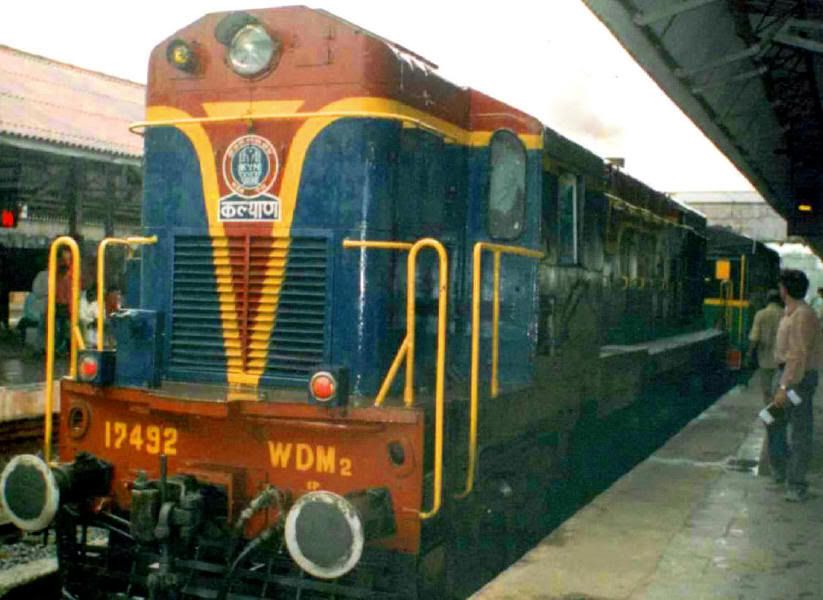
Karwar region extends from Pernem to Thokur (the latter being where Southern Railway begins, a few stations north of Mangalore).

Note: Although KR is currently single-line, KR and South Western Railway lines run parallel from Majorda to Madgaon, making that section a double-line.

North Central Railway (apr 2003)

The North Central Railway is one of the new railway zones in India. It is headquarted at Allahabad and comprises reorganized Allahabad division of Northern Railway, Jhansi division of Central Railway, and new Agra division.

North Eastern Railway

The North Eastern Railway is one of the sixteen railway zones in India. It is headquarted at Gorakhpur and comprises Lucknow and Varanasi divisions as well as reorganized Izzatnagar division.

North Western Railway(oct 2002)

The North Western Railway is one of the new zones in India. It is headquarted at Jaipur and comprises Jodhpur division and reorganized Bikaner division of Northern Railway, and reorganized Jaipur and Ajmer divisions of Western Railway.

Northeast Frontier Railway

The North Eastern Railway was created during the reorganisation of the Indian Railways system in 1952 by amalgamating the Assam Railway and Avadh-Tirhut Railway. To better serve the needs of the of the northeastern states, the Northeast Frontier Railway, NFR, was carved out of the North Eastern Railway in 1958. Head quartered in Maligaon, Guwahati, the capital of the state of Assam it is responsible for rail operations in the entire Northeast and parts of West Bengal and Bihar. It is divided into 5 divisions:

Tinsukia
Lumding
Rangiya
Alipurdaur
Katihar


The area of Northeast Frontier Railways operations is characterised by exceptional beauty and at the same time by some of the most arduous terrain. This difficult terrain limits the rail netwrok expansion and the only state with a decent rail network is Assam. The network is not borad guage in many parts and the rail lines are antiquated with speeds at some sections being limited to a maximum of 30 km/h.

Northern Railway

The Northern Railway is one of the sixteen railway zones in India. It is headquatered in Delhi and comprises of Ferozpur, Ambala, Lucknow and Moradabad divisions. It is one of nine older zones of Indian Railways and has the largest route kilometers of track (6807 kms) under its jurisdiction even after the reorganization of the railways into the new zonal structure. It was created on 14 April 1952 from the Jodhpur Railway, Bikaner Railway, three divisions of the East Indian Railway north-west of Mughalsarai, and the Eastern Punjab Railway. It covers the states of Jammu and Kashmir, Punjab, Haryana, Himachal Pradesh, Uttaranchal, Uttar Pradesh, Delhi and the Union Territory of Chandigarh. It also operates the largest Route Relay Interlocking (RRI) system in the world at Delhi.

South Central Railway

The South Central Railway is one of the 16 railway zones in India. It is headquarted at Secunderabad and has the following divisions: Reorganized Secunderabad, Hyderabad, Guntakal (including Bellary-Guntakal (MG) and Bellary-Rayadurg), Vijayawada, new Guntur and Nanded. It covers the state of Andhra Pradesh and some parts of Karnataka and Maharastra.

It was created on 2 October 1966 as the ninth zone of Indian Railways. It has 5752 route kilometers of track.

South East Central Railway (apr 2003)

The South East Central Railway is one of the new railway zones in India. It is headquarted at Bilaspur and comprises Nagpur division, reorganized Bilaspur division of South Eastern Railway and new Raipur division.

South Eastern Railway

The South Eastern Railway is one of the sixteen railway zones in the India. It is headquatered at Kolkata and comprises Kharagpur division, reorganized Adra and Chakradharpur divisions and new Ranchi division.

The South Western Railway

The South Western Railway is one of the 16 railway zones in India. It is headquarted at Hubli and comprises Bangalore and Mysore divisions of Southern Railway, reorganized Hubli division of South Central Railway including Hospet-Toranagal.

Southern Railway

Southern Railway Headquarters,Madras(Chennai)


Southern Railway is the first Railway Zone to be created in independant India. It was created on April 14, 1951 by merging three state railways namely Madras and Southern Mahratta Railway, the South Indian Railway, and the Mysore state railway.

Southern Railway has its headquarters in Chennai and has the following divisions: Chennai, Madurai, Palakkad, Thiruvananthapuram and Tiruchirapalli. It covers the states of Tamil Nadu, Kerala, Pondicherry and small portions of Andhra Pradesh and Karnataka. More than 500 million passengers travel on the network every year.

West Central Railway(apr 2003)

The West Central Railway is one of the new zones of Indian Railways, created in April 2003. It was also a private railway company of former British India, which was later nationalized.

The former West Central Railway (WCR) was founded in British India in 1924. It began transporting military goods for the British armed forces in 1928, when the railway from Bombay to Poona was finished. In the late 1930s, the "Indian Railway of Bombay" started passenger transportation, but as war began, these efforts were suspended. The private company was taken over by the Royal Army in 1940.

The "Railway of Bombay" did not restart its business until India became independent in 1947. On November 5, 1951, it was split into the Western Railway (WR) and Central Railway (CR). In the late 1960s three other railway lines were built, leaving Bombay in different directions, reaching Ahmadabad in the North, Nagpur in the East, and Hyderabad in the southeast.

The Western Railway is headquartered in Bombay Central and the Central Railway in Chhatrapati Shivaji Terminus, formerly Victoria Terminus. The CR is the largest Indian rail network in terms of passenger load. Both the services run suburban rail servies in Bombay.

In April 2003, the West Central Railway was reconstituted from the Jabalpur and Bhopal divisions of CR and the reorganized Kota division of WR. It is headquartered at Jabalpur. The new West Central Railway serves northern Madhya Pradesh and Chhattisgarh states, southern Uttar Pradesh state, and northwestern Rajasthan state. It includes portions of the former Indian Midland Railway and the Gwalior state railways.

Western Railway


The Western Railway is one of the 16 zones of Indian Railways, and is among the busiest railroad networks in India. There are primary two railroad lines: Route A from New Delhi to Mumbai via Kota, Ratlam and Dahod and Route B from New Delhi) to vadadara via ahmadabad & Bhopal to Indore through the west indian statesof Rajasthan and Gujarat.

Major cities in Western Railway Route A include Mumbai Central, Valsad, Surat, Vadodara (Baroda), Godhra, Ratlam.

Route B includes Mumbai Central, Valsad, Surat, Vadodara, Nadiad, Ahmedabad, Palanpaur

History
The Western Railway was created on November 5, 1951 by the merger of several state-owned railways, including the Bombay, Baroda, and Central India Railway (BB&CI), and the Saurashtra, Rajputana and Jaipur railways. The BB&CI Railway was itself inaugurated in 1855, starting with the construction of a 29 mile (47 km) broad gauge track from Ankleshwar to Utran in Gujarat state on the west coast. In 1864, the railway was extended to Mumbai.

Subsequently, the project was further extended beyond Baroda in a north easterly direction towards Godhra, Ratlam, Nagda and thereafter northwards towards Mathura, to eventually link with the Great Indian Peninsular Railway, now the Central Railway, which had already started operating in Mumbai in 1853. In 1883, a meter gauge railway system, initially linking Delhi with Agra, Jaipur and Ajmer, was established.

The first suburban service in Mumbai with steam traction was introduced in April 1867. It was extended to Churchgate in 1870. By 1900 45 trains in each direction were carrying over one million passengers annually.

The railways of several princely states were also integrated into the Western Railway. The Gaekwar Maharajas of Baroda built the Gaekwar's Baroda State Railway (GBSR), which was merged into the BB&CI in 1949. Several railways of western Gujarat, including the Bhavnagar, Kathiawar, Jamnagar & Dwarka, Gondal, and Morvi railways were merged into the Saurashtra Railway in 1948. The Jodhpur and Bikaner Railway was taken over by Rajasthan state in 1949, after the western portion was ceded to the government of Pakistan.

In 2002 the Jaipur and Ajmer divisions of the Western Railway became part of the newly-created North Western Railway, and in April 2003 the Kota division of the Western Railway became part of the newly-created West Central Railway.

Present
Western Railway serves entire Gujarat, a large part of Rajasthan, some portion of Madhya Pradesh and small parts of Haryana and Uttar Pradesh. The Western coast of India served by Western Railway has a number of ports, important among them being Kandla, Okha, Porbandar and Bhavnagar in Gujarat State.

The suburban section of western railway in Mumbai extends from Churchgate, the city's business and residential centre, to Virar covering a distance of 60 km and 28 stations. Recently the section has been added to Dahnu Road adding 10 more stations and 60 km. The first electric train on this section was introduced in 1928 between Churchgate and Borivali.

The gauge-wise kilometrage of Western Railways at present, is as under:

Gauge Length
Broad Gauge 4,305 km
Metre Gauge 4,838 km
Narrow Gauge 877 km
Total 10,020 km

It is the most electrified railroad system in the Indian Railways making it the most important railroad in India.

The Western Railway has its headquarters at Mumbai. It also runs the Western Line of the Mumbai suburban railway system.

The railway has six operating divisions: Bhavnagar, Mumbai, Ratlam, Rajkot, Vadodara, and Ahmedabad.

Mumbai Suburban Railway system

The Mumbai Suburban Railway system is life line of Mumbai.It carries more than 6.1 million commuters everyday. It has the highest passenger density in the world. More than half of the total daily passenger trips on Indian Railways are performed on Mumbai Suburban Railway system It is .operated by central & western Railway with a train at every 3 minutes during peak hour

Given the geographical spread of the population and location of business areas, the rail network will continue to be the principal mode of mass transport in Mumbai.


The Suburban Railway system in Mumbai is perhaps the most complex, densely loaded and intensively utilised system in the world. Spread over 302 route kilometres, it operates on 1500 V DC power supply( under conversion to AC) from overhead catenary lines. The suburban services are run by electric multiple units (EMUs). 184 rakes (train sets) of 9-car and 12-car composition are utilised to run 2067 train services to carry 6.1 million passengers per day.

Mumbai Suburban Railway system, in spite of heavy demands on it, has provided an efficient and reliable service. Overcrowding has grown to such an extent that 4,700 passengers are traveling per 9-car train during peak hours, as against the rated carrying capacity of 1,700. This has resulted in what is known as super dense crush load of 14-16 standing passengers per square metre of floor space!

Mumbai Railway Vikas Corporation (MRVC)


To enable the Mumbai Suburban Railway to meet the demands of the ever-growing passenger traffic, Ministry of Railways and the Government of Maharashtra envisioned MRVC.

Mumbai Railway Vikas Corporation Ltd (MRVC Ltd), a public sector unit of Govt. of India under Ministry of Railways (MOR) was incorporated under Companies Act, 1956 on July 12, 1999. with an equity capital of Rs 25 crores (Rs 250,000,000) shared in the ratio of 51:49 between Ministry of Railways and Government of Maharashtra to implement the rail component of an integrated rail-cum-road urban transport project called Mumbai Urban Transport Project (MUTP). The cost of the rail component of the project is to be shared equally by Ministry of Railways and Government of Maharashtra.

Zones and Corridors

Suburban Rail Network map of Mumbai(Bombay)


Two zonal Railways, the Western Railway (WR) and the Central Railway (CR), operate the Mumbai Suburban Railway system. At present, the fast corridors on Central Railway as well as Western Railway are shared for long distance (main line) and freight trains.

Western Line
Two corridors (one local and other through) on Western Railway run northwards from Churchgate terminus parallel to the west coast up to Virar (60 km). These corridors are popularly referred to as 'Western Line' by the locals

Central Line
Two corridors (one local and other through) on Central Railway run from Chhatrapati Shivaji Terminus (CST) to Kalyan (54 km),from where it bifurcates into Kalyan–Kasara (67 km) in the north-east and Kalyan–Karjat–Khopoli(61 km) in south-east. These corridors are popularly referred to as 'Central Line' or 'Main Line' by the locals.

Harbour Line
The 5th corridor on Central Railway runs from CST to Raoli Junction (11 km) from where the line splits. One line goes north west to join WR at Mahim and goes up to Andheri (11 km), and the other goes eastward to terminate at Panvel (39 km) via Navi Mumbai. This corridor is popularly referred to as 'Harbour Line' by the locals.

A Mumbai Suburban train

List of stations

Western line
Within Greater Mumbai: Churchgate, Marine Lines, Charni Road, Grant Road, Mumbai Central, Mahalaxmi, Lower Parel, Elphinstone Road, Dadar, Matunga Road, Mahim, Bandra, Khar Road, Santacruz, Vile Parle, Andheri, Jogeshwari, Goregaon, Malad, Kandivali, Borivali, Dahisar.

Outside Greater Mumbai: Dahisar, Mira Road, Bhayandar, Naigaon, Vasai Road, Nallasopara, Virar, Vaitarna, Saphala, Kelve Road, Palghar, Umroli, Boisar, Vangaon, Dahanu Road

Central (Main) line
Within Greater Mumbai: Chhatrapati Shivaji Terminus, Masjid, Sandhurst Road, Byculla, Chinchpokli, Currey Road, Parel, Dadar, Matunga , Sion, Kurla, Vidyavihar, Ghatkopar, Vikhroli, Kanjurmarg, Bhandup, Mulund, Thane

Outside Greater Mumbai: Thane, Kalva, Mumbra, Diwa, Dombivli, Thakurli, Kalyan

Kalyan, Vithalwadi, Ulhasnagar, Ambarnath, Badlapur, Vangani, Shelu, Neral, Bhivpuri Road, Karjat, Palasdhari, Kelavli, Dolavli, Lowjee, Khopoli
Kalyan, Shahad, Ambivli, Titwala, Khadavli, Vasind, Asangaon, Atgaon, Khardi, Kasara

Harbour line
Within Greater Mumbai: Chhatrapati Shivaji Terminus, Masjid, Sandhurst Road, Dockyard Road, Reay Road, Cotton Green, Sewri, Vadala road

Vadala road, Kings Circle, Mahim, Bandra,Khar Road, Santacruz, Vile Parle, Andheri
Vadala road, Guru Tegh Bahadur Nagar, Chunabhatti, Kurla,Tilak Nagar, Chembur, Govandi, Mankhurd
Outside Greater Mumbai: Vashi, Sanpada, Juinagar, Nerul, Seawoods, Belapur, Khargar, Mansarovar, Khandeshwar, Panvel

Diwa-Vasai Road Corridor
Diwa, Dombivli, Bhiwandi, Kharbao, Kaman, Vasai Road

Thane-Turbhe-Vashi Corridor
Thane, Dighe,Airoli, Rabale, Ghansoli, Kopar Khairane, Turbhe, sanpada, Vashi

New coaches


Under the Mumbai Urban Transport Project the city would be receiving newly designed coaches manufactured by the Integral Coach Factory, Perambur. The coaches are built of stainless steel, and have cushioned seats, bigger windows, better suspension and ventilation. 101 new trains have been procured under the project at a total cost of Rs 1,900 crore (19 billion).

1

Railway 16 Zones

The image “http://www.rmtbristol.org.uk/IndianRailwaysSmall.jpg” cannot be displayed, because it contains errors.
Now Indian Railway is divided in to 16 Zones they are
The nine older railway zones are:
# Northern Railway (NR)
# North Eastern Railway (NER)
# Northeast Frontier Railway (NFR, sometimes NEFR)
# Western Railway (WR)
# Southern Railway (SR)
# South Central Railway (SCR)
# South Eastern Railway (SER)
# Eastern Railway (ER)
# Central Railway (CR)

The 7 new zones are:
# South Western Railway (SWR)
# North Western Railway (NWR)
# West Central Railway (WCR)
# North Central Railway (NCR)
# South East Central Railway (SECR)
# East Coast Railway (ECoR)
# East Central Railway (ECR)

Rail Jobs

The image “http://www.sacrt.com/images/newlightrailvehicle.jpg” cannot be displayed, because it contains errors.The image “http://www.mapsofindia.com/maps/india/indian_railway.jpg” cannot be displayed, because it contains errors.

Indian Railways Map

For more information about Indian Railways : Indian Railways
The Railways in India are the principal mode of transportation for freight and passengers. The railways have played an important role in the development of industries and agriculture. Indian railways consist of a vast network of 7, 031 stations spread over a route length of 63, 221 km with a fleet of 7,817 locomotives, 5,321 passenger service vehicles, 4, 904 other coaching vehicles and 228, 170 wagons as on 31st March 2004.

Indian Railway has the distinction of being one of the biggest and busiest rail networks in the world carrying more than sixteen million passengers on a daily basis. In terms of headcount again Indian Railway scores as it employs more than 1.6 million employees that is only second to the Chinese Army in terms of people employed.

Spanning nearly two centuries Indian Railways has been serving the country with utmost pride. It was only in 1851 when the first train ran in the country for hauling construction material in Roorkee and by 1853 the first passenger train service became operational running between Bori Bunder, Bombay and Thane covering a distance of twenty one miles thus marking the formal birth of rail network in India.

The Indian Railways network binds the social, cultural and economical fabric of the country and covers the whole of country ranging from north to south and east to west removing the distance barrier for its people. The railway network of India has brought together the whole of country hence creating a feeling of unity among the Indians.